
Sunset Dunes: The Right Side of History

By Joel Engardio
As a city supervisor, I led the effort to close a section of the Great Highway in San Francisco and create a coastal park called Sunset Dunes. It was the largest pedestrianization project in California history.
Sunset Dunes quickly became one of San Francisco’s most-visited and beloved parks. But fears over traffic congestion and new driving routes also generated fierce opposition to the park.
A majority of the Board of Supervisors agreed with me that we should let voters decide whether to make Sunset Dunes a permanent park or not. So we put the question on the ballot in 2024.
A majority of San Francisco voters said yes to a park on the western edge of the city. But a majority of voters in my westside district said no. As a result, I was recalled from office in 2025.
I want to apologize to anyone who did not feel heard in the process to create Sunset Dunes. No person or process is perfect. It’s always important to listen to the concerns people have.
Residents have been debating the Great Highway and Sunset Dunes for more than five years. Each side expressed their position many times in multiple forums, lawsuits, appeals, and ballot measures.
The process that ultimately created Sunset Dunes was the most open, transparent, and democratic version possible: a vote by the people. Every voter had an equal say about what to do with their coast because the coast belongs to everyone, not just one neighborhood.
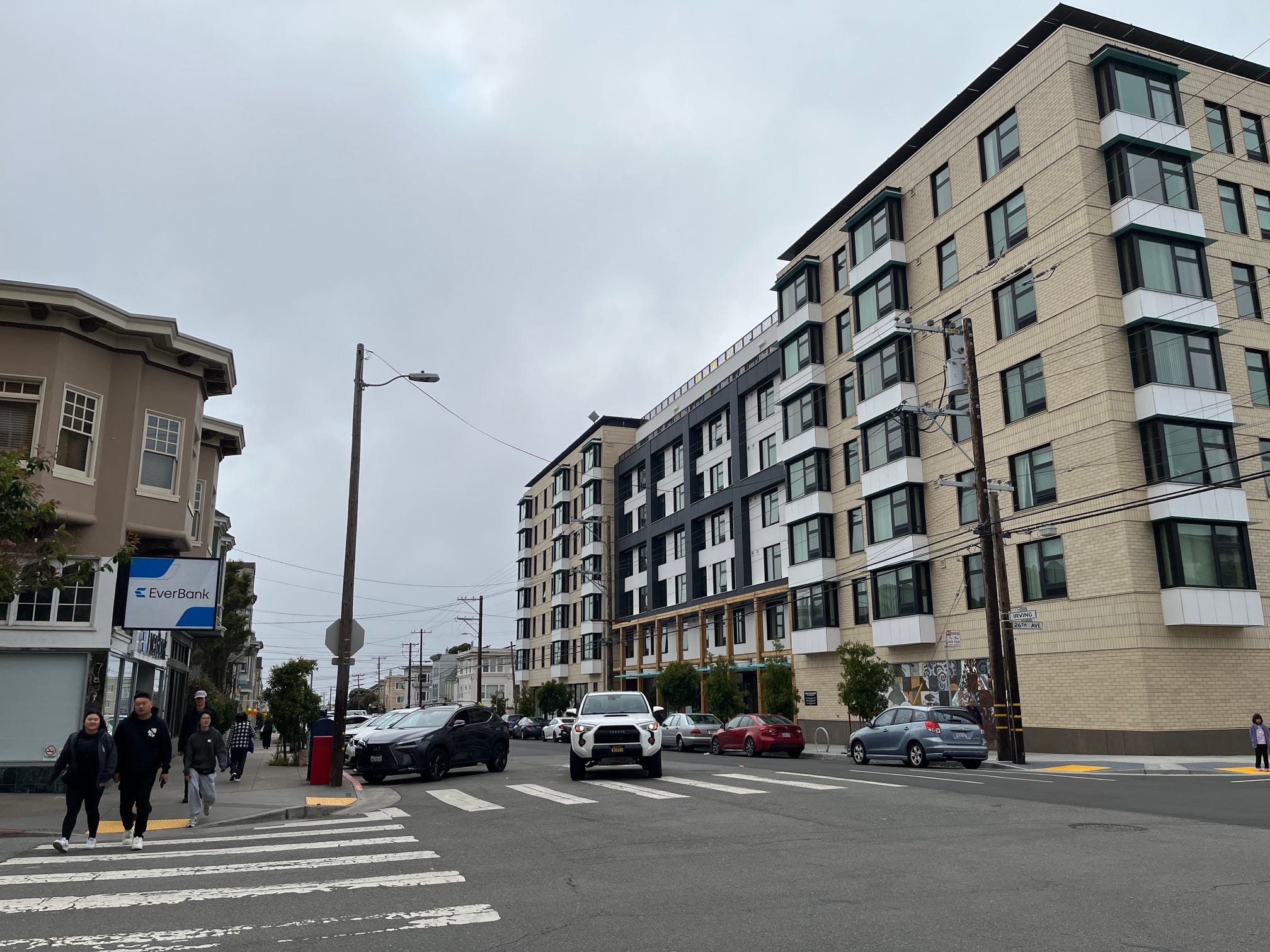
The feared traffic “carmageddon” never happened. But the benefits of Sunset Dunes are real. The park is good for the environment, provides a boost to local businesses, gives people more access to their coast, and improves the physical and mental well-being of every visitor.
It’s time to accept that Sunset Dunes is a success. There’s no reason to keep fighting over a park and a road when the park is popular and traffic is fine. We should focus on more pressing issues like affordability, protecting our immigrant community, and everything else that has the world on fire.
Sunset Dunes is on the right side of history. Before long, we won’t be able to imagine San Francisco without a coastal park and all the good it contributes to our city.
What is Sunset Dunes?
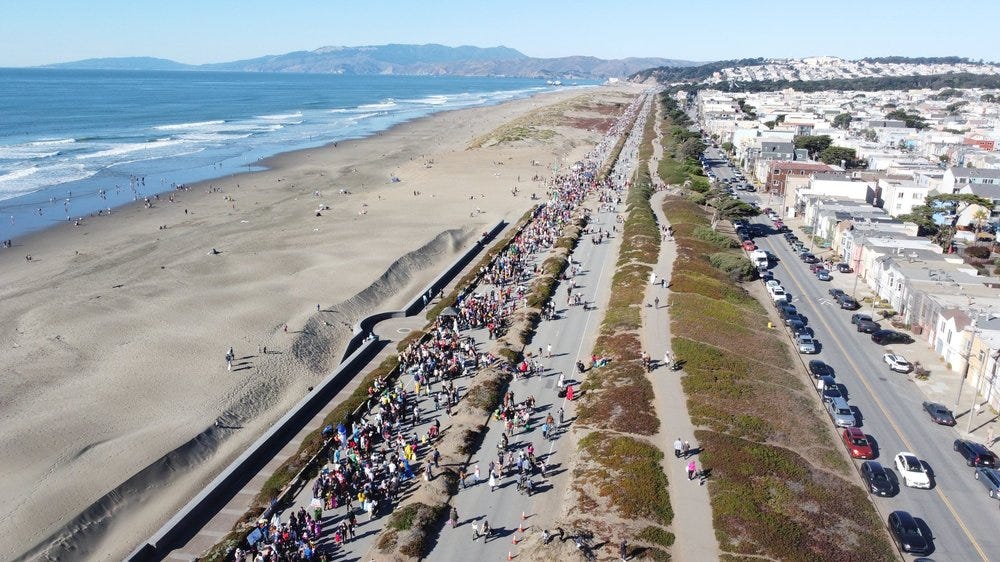
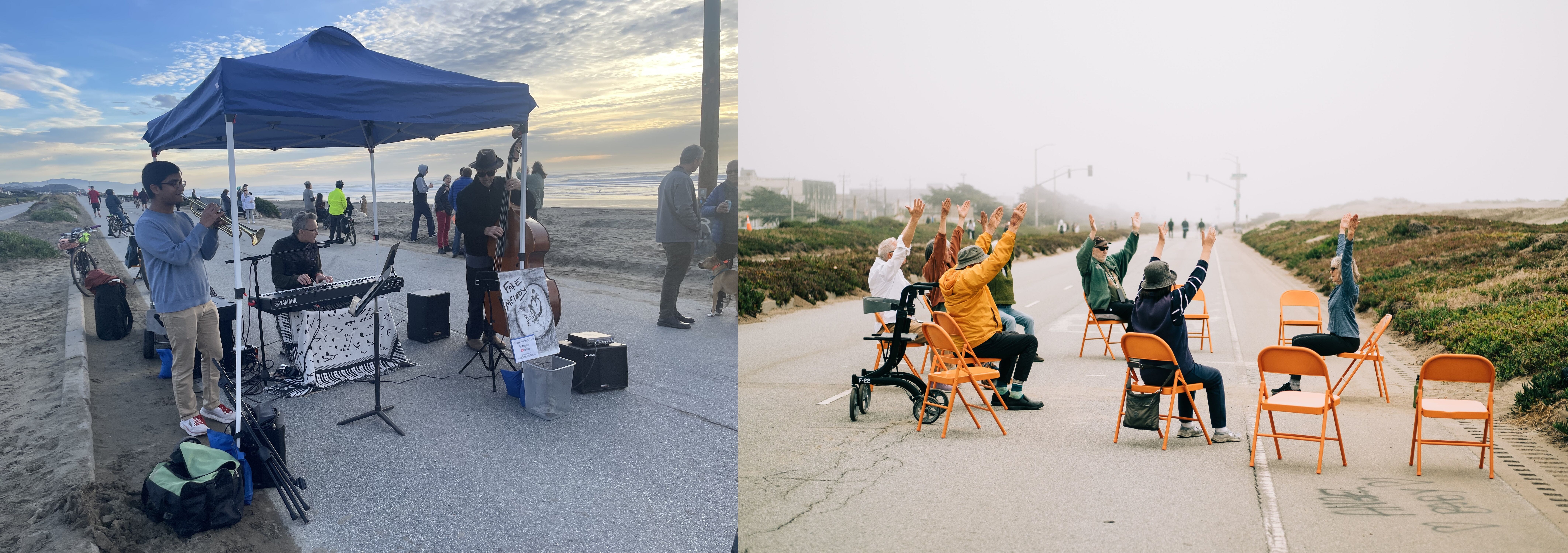
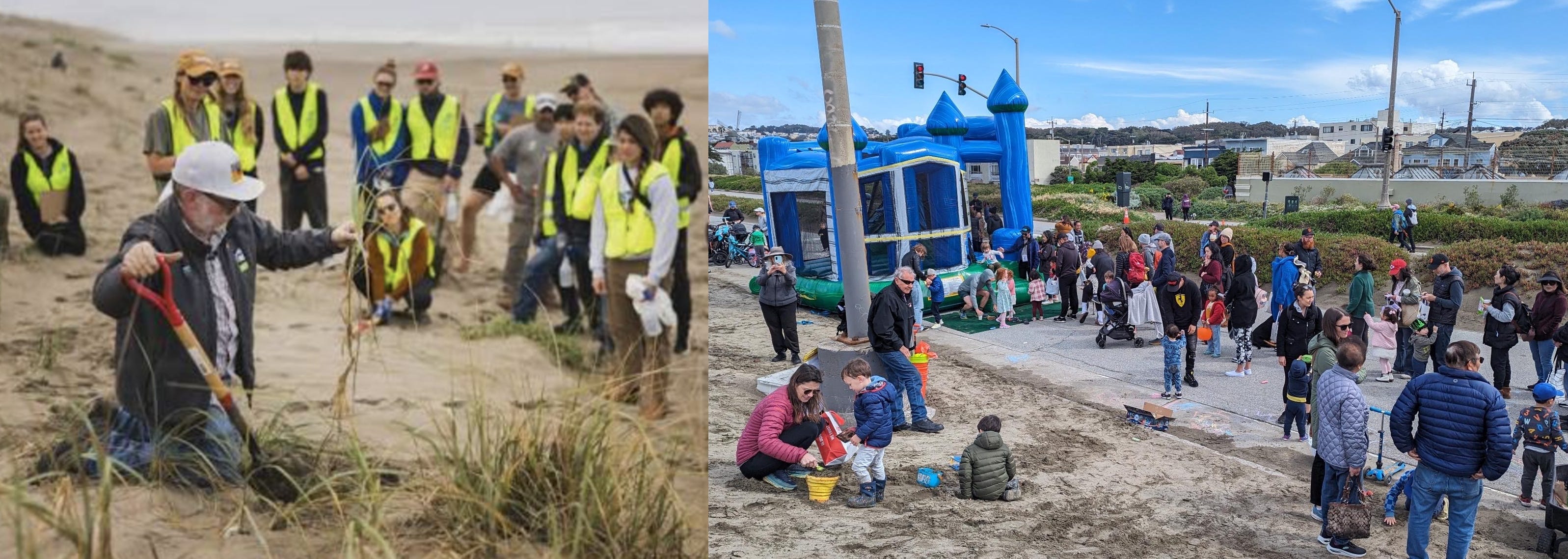
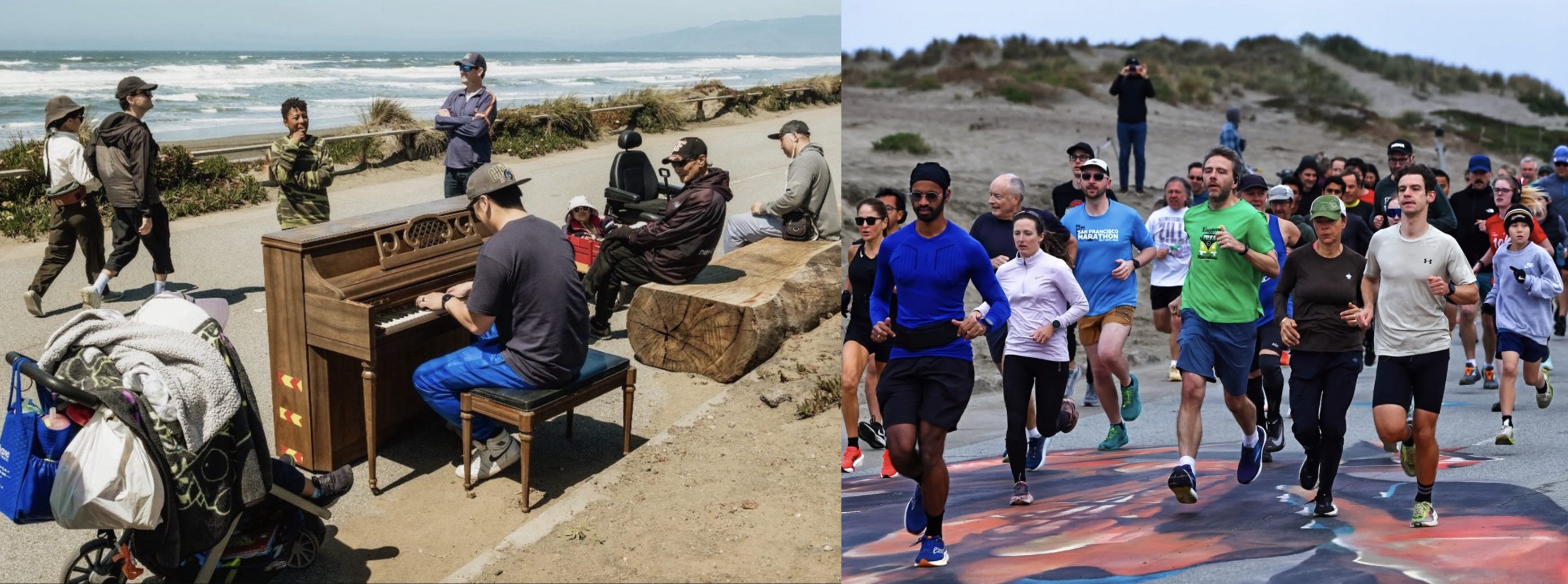
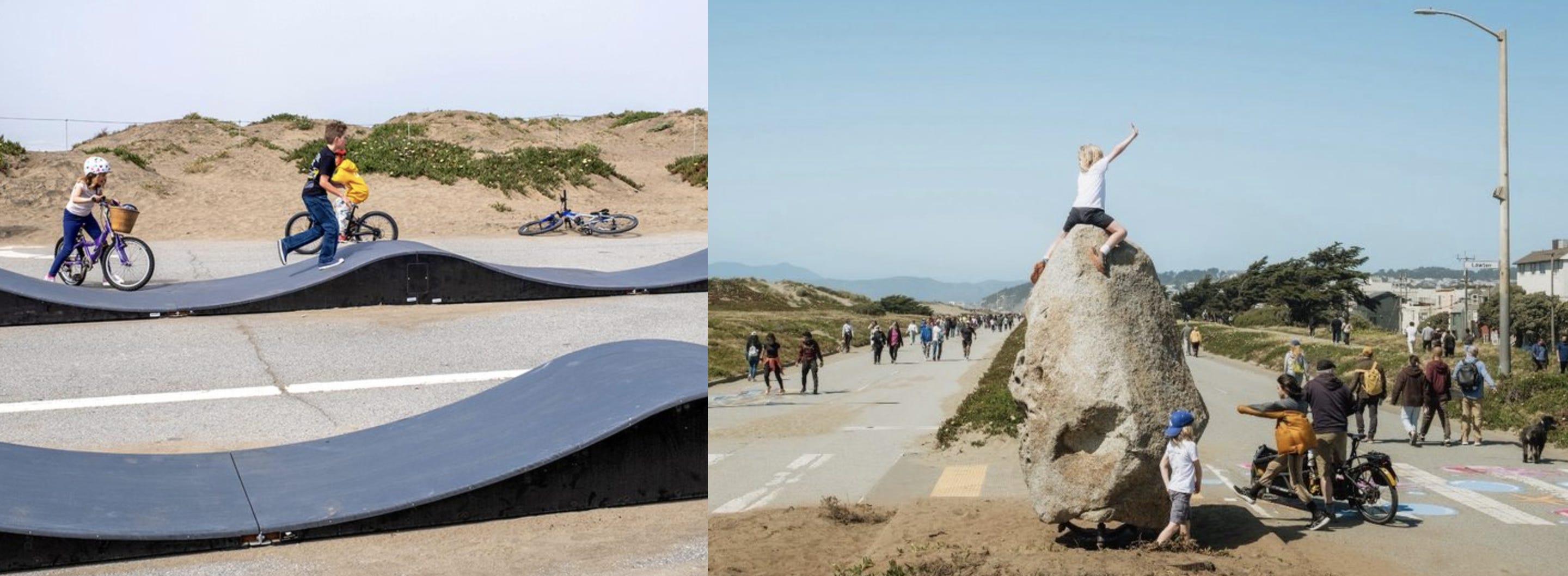
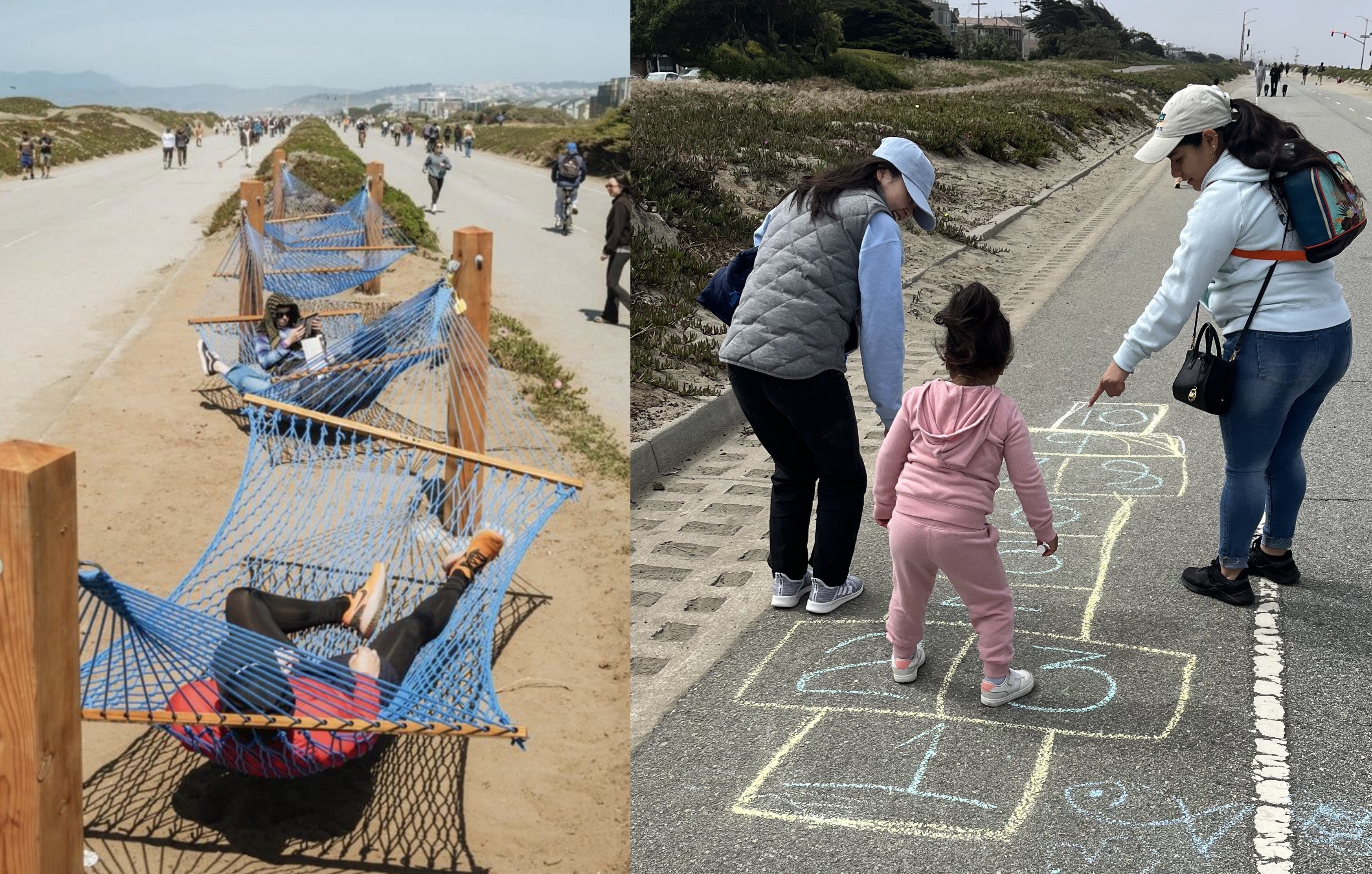
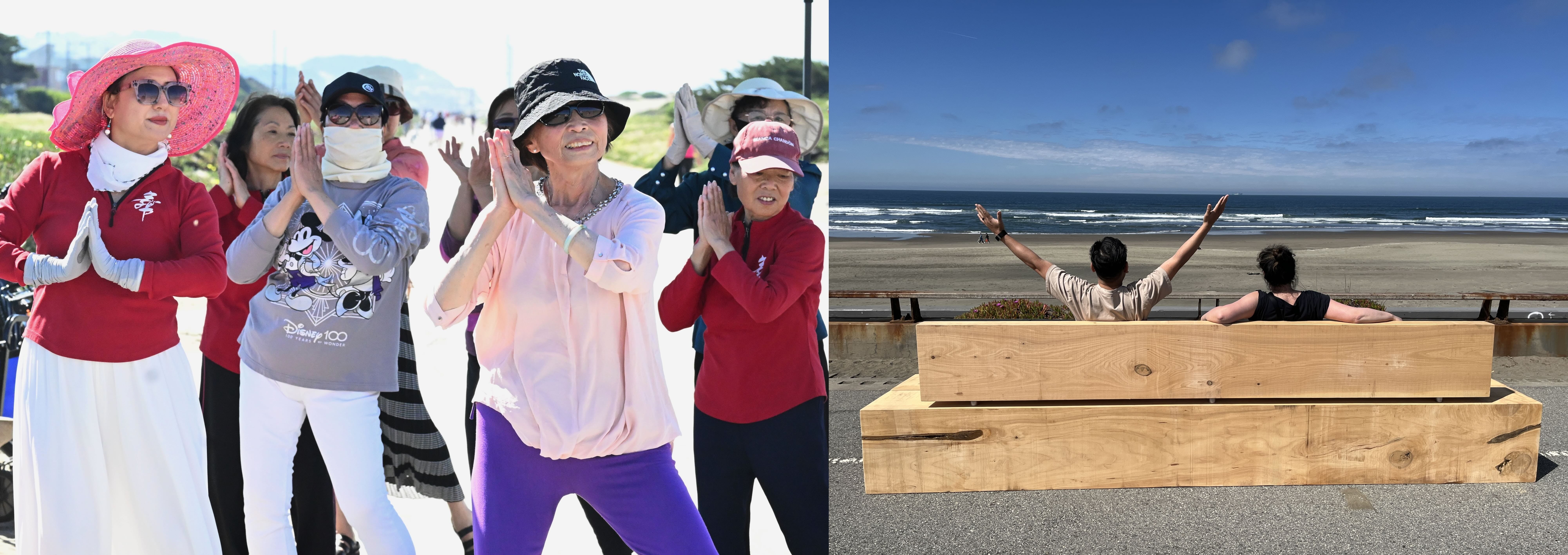
Sunset Dunes stretches nearly two miles along the ocean at the western edge of San Francisco. It is a unique space where people of all backgrounds and ages can discover new ways to enjoy their coast. The community is enriched with every holiday and cultural celebration, music concert, art exhibit, fun run, dune restoration event, and yoga class held in the park.
What is the Great Highway?
To understand the Great Highway, we need to look at its history.
The Great Highway was built 100 years ago at the birth of America’s great car culture, which promoted a strong emotional connection to the open road.
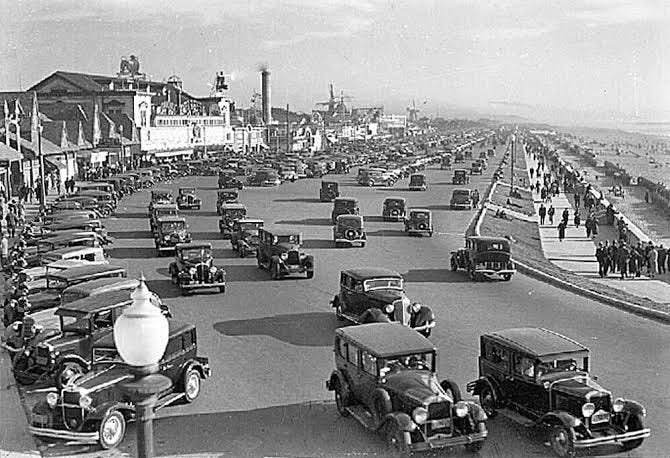
The Great Highway connected two recreational areas — an amusement park at one end and a zoo at the other. Only the zoo remains today.
As muscle cars and Mustangs entered car culture, the stretch became popular for drag racing.
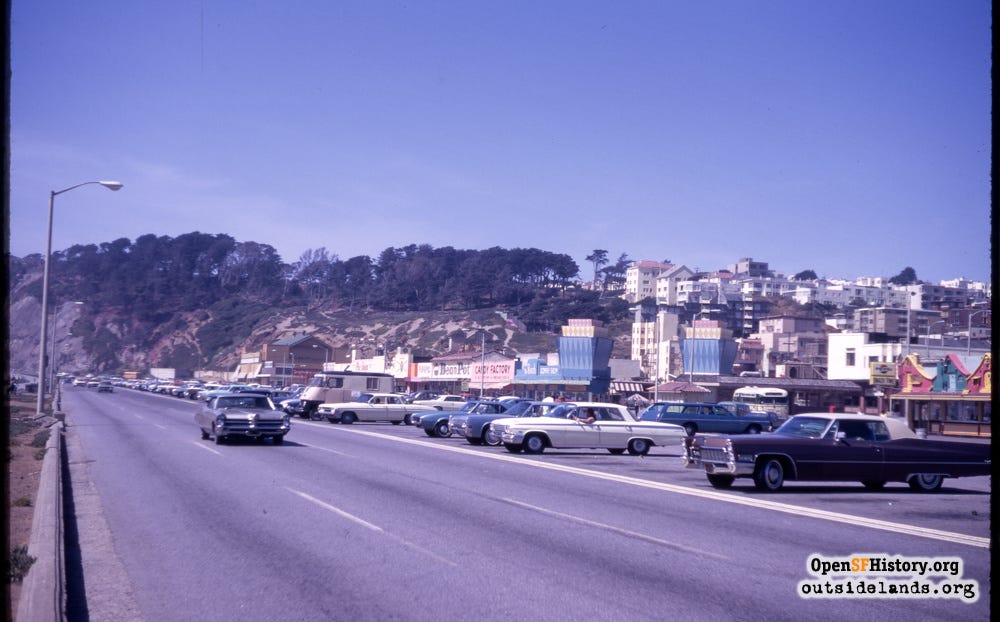
I’ve heard many seniors express nostalgia for the drag racing days they remember as teenagers. Giving up the road today can feel like losing a part of themselves. That’s why accepting change can be difficult, especially when it’s beyond anyone’s control.
But drag racing ended long ago after a 10-year-old child was killed trying to cross the road to get to the beach. The city installed crosswalks and stop lights.
Then the Great Highway became a popular commuter route for people to get from Daly City to the Richmond district.
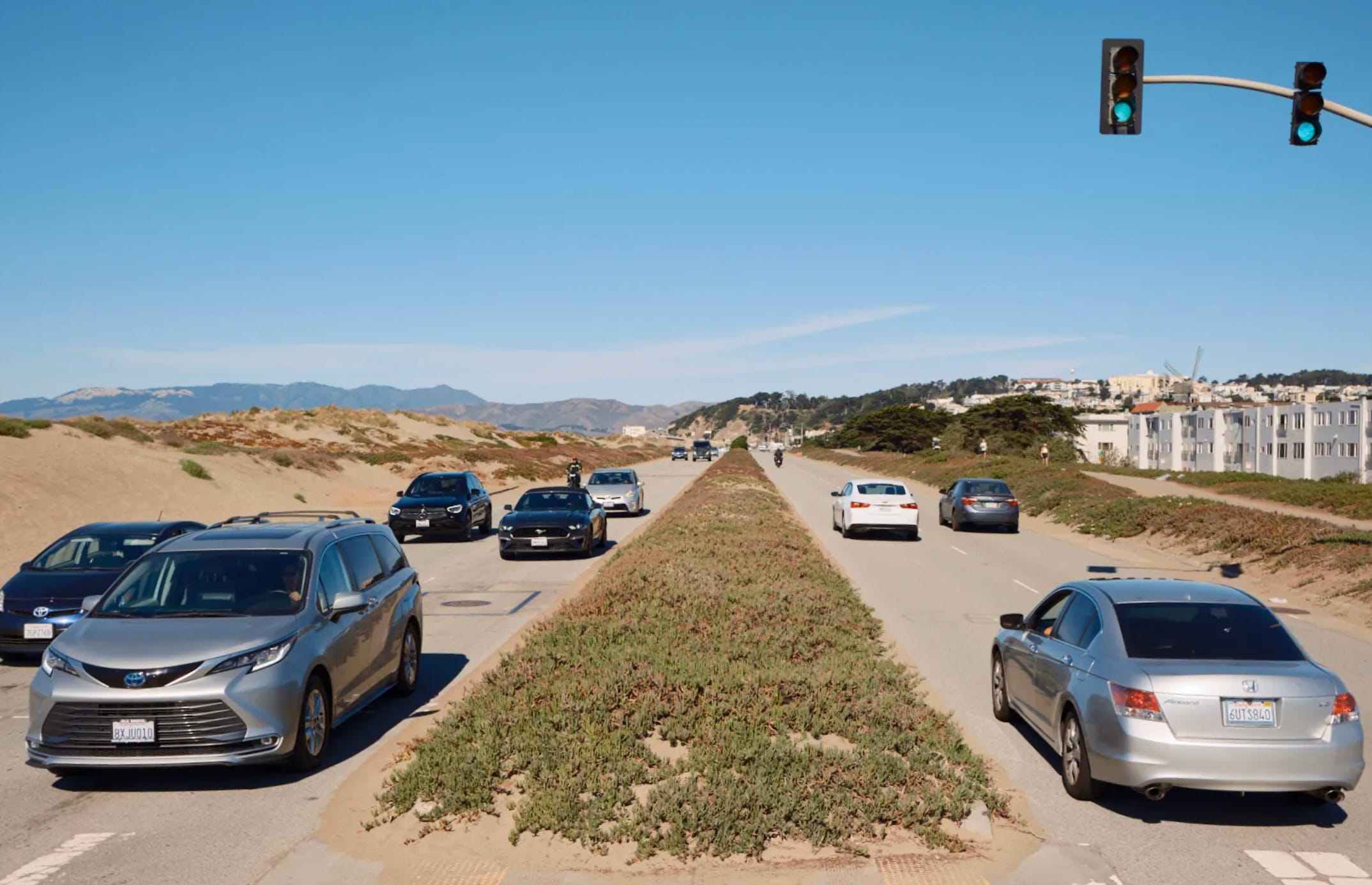
It’s important to understand what we’re talking about when we say “Great Highway.” It’s a road with three sections: northern, middle, and southern.
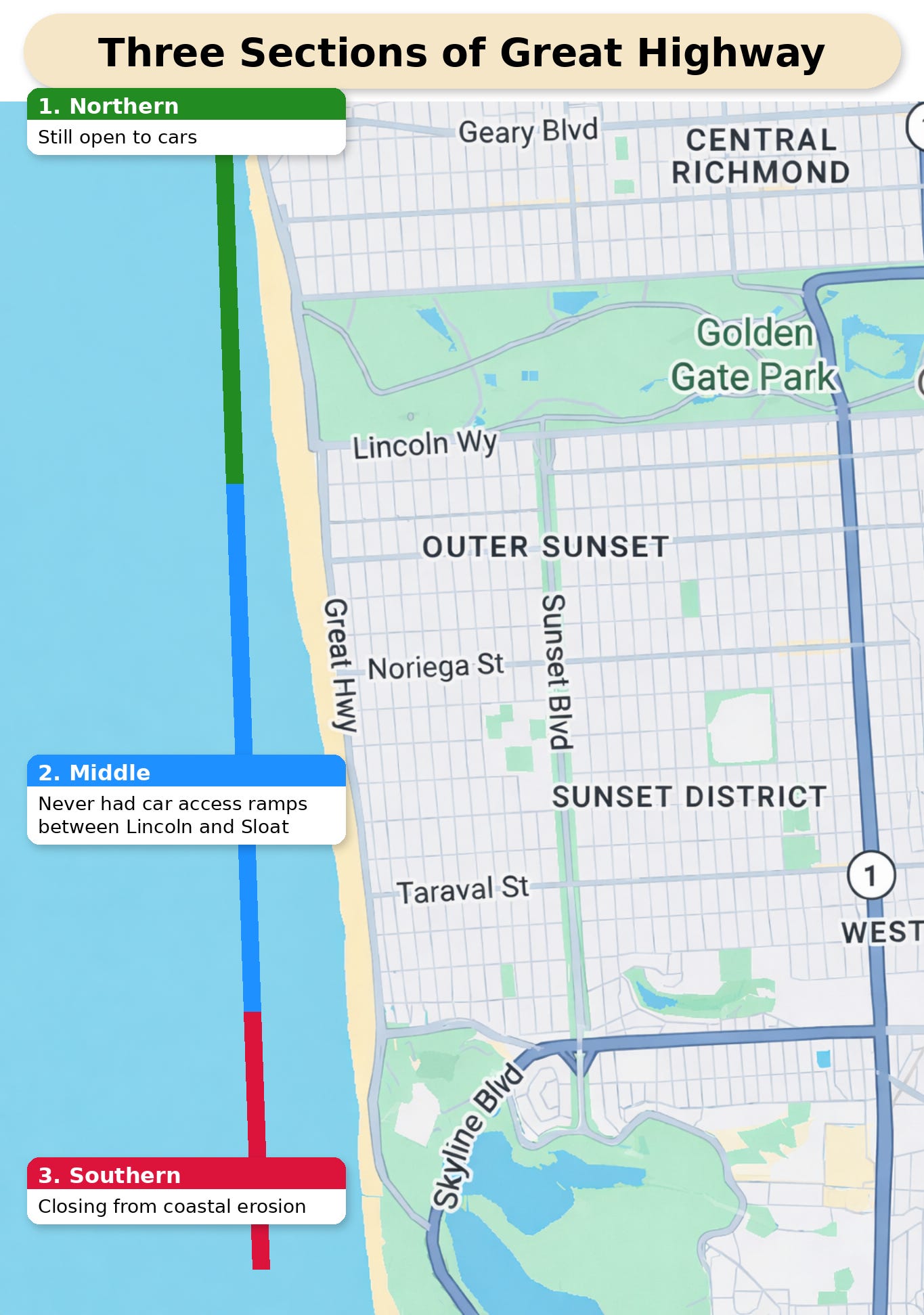
The news media rarely makes the distinction that the Great Highway has three sections. They just say “the Great Highway was closed” without pointing out that a key part of the road remains open to cars.
Drivers continue to use the northern section to get to school and work. That’s because the northern section is what actually connects the Richmond and Sunset neighborhoods.
The middle section is what became Sunset Dunes. The middle section never had access for cars. It bypassed the Sunset for two miles.
And that brings us to the southern section of the Great Highway. It fell into the ocean from severe coastal erosion.
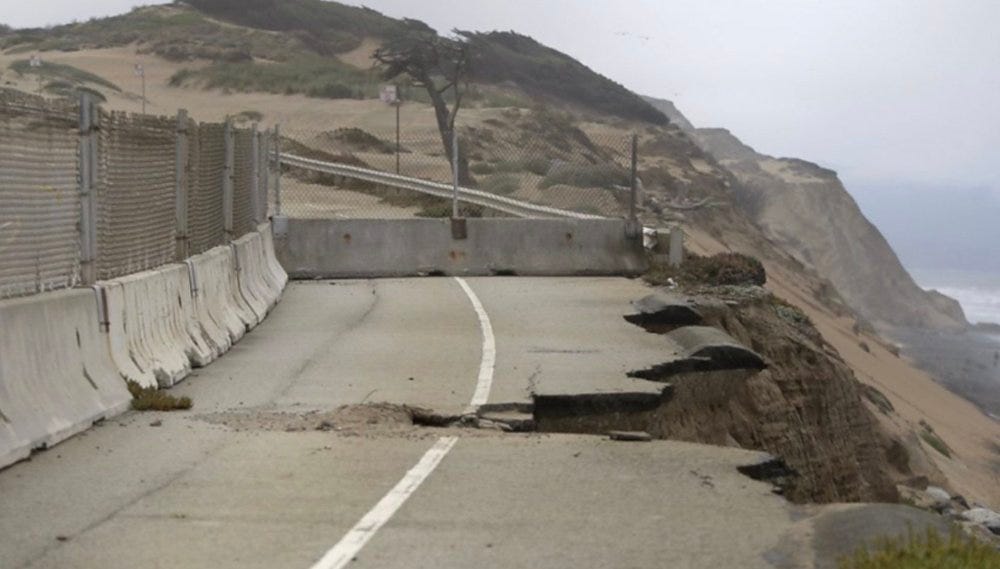
The southern section was going to close by state mandate with or without Sunset Dunes. We lost our convenient connection to Daly City and traffic had to divert inland no matter what.
Mother Nature gave us a lemon. Sunset Dunes is the lemonade.
The good news is everyone can still get where they need to go by car — even to the VA hospital.
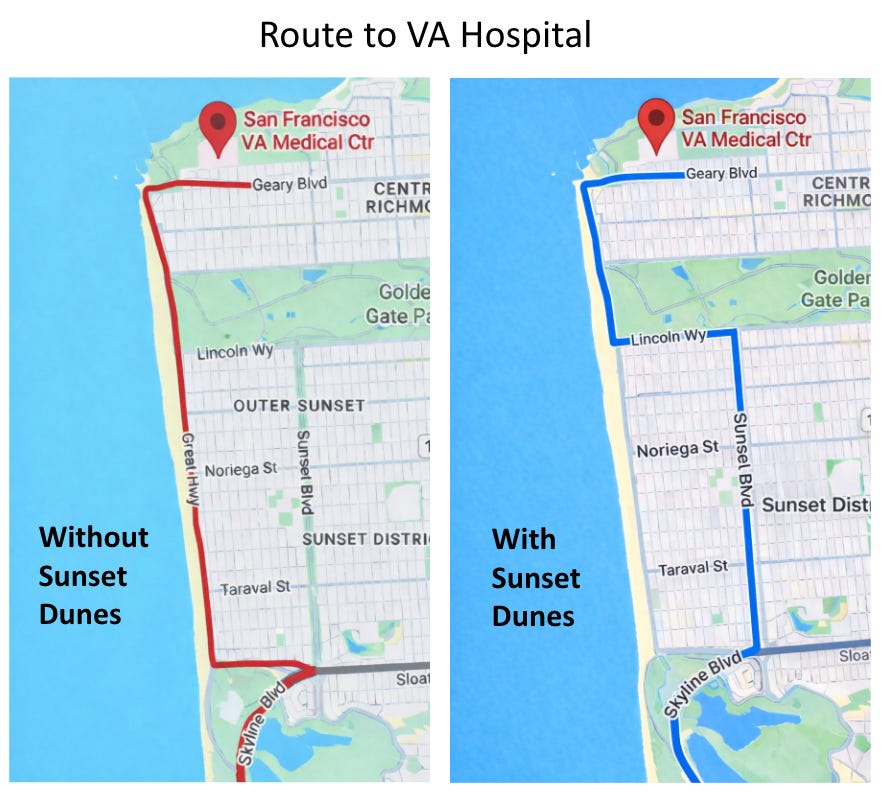
Getting to the VA hospital is a concern often heard. But no one is blocked from getting there by car — or anywhere else.
On the map above, the red line is how you get to the VA hospital without Sunset Dunes. The blue line is with Sunset Dunes. It’s the same distance.
Notice the northern part of the Great Highway is still open to cars. The Great Highway north of Lincoln Way still connects the Richmond and Sunset neighborhoods.
Also notice Sunset Boulevard. It has six lanes of traffic that runs parallel to the four-lane Great Highway. Sunset Boulevard has plenty of capacity for all the cars that need to use it.
Multiple traffic studies have shown minimal impact.
What about the congestion of cutting through Golden Gate Park at Chain of Lakes? This shortcut was a bottleneck long before Sunset Dunes — because everyone likes a shortcut.
But this congestion can be avoided. Drivers can use the Great Highway to go around Golden Gate Park instead of cutting through it.
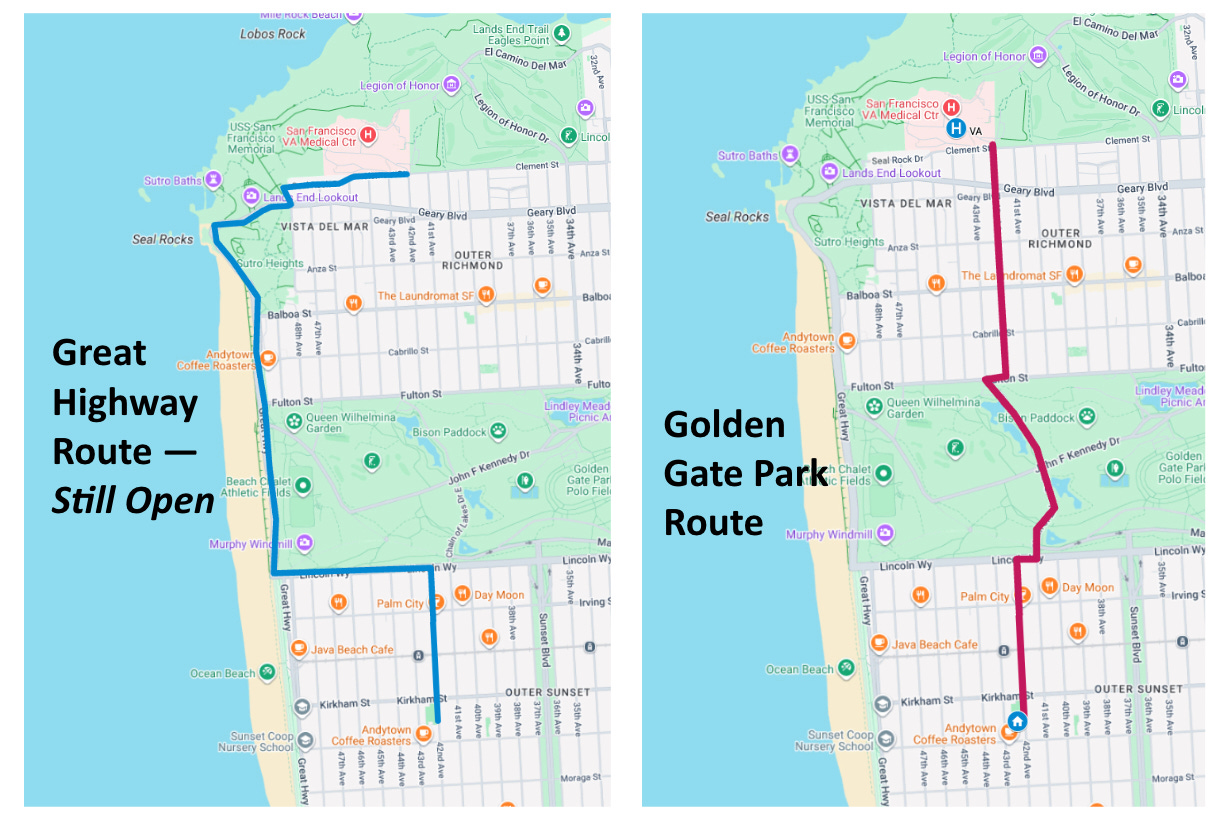
It’s easier than ever to go around Golden Gate Park because new traffic lights and dual turn lanes were installed at the intersection of Lincoln Way where the Great Highway remains open to cars.
But what about 19th Avenue? It’s always been congested.
19th Avenue traffic looks the same today as it did 50 years ago. Only the style of cars has changed.
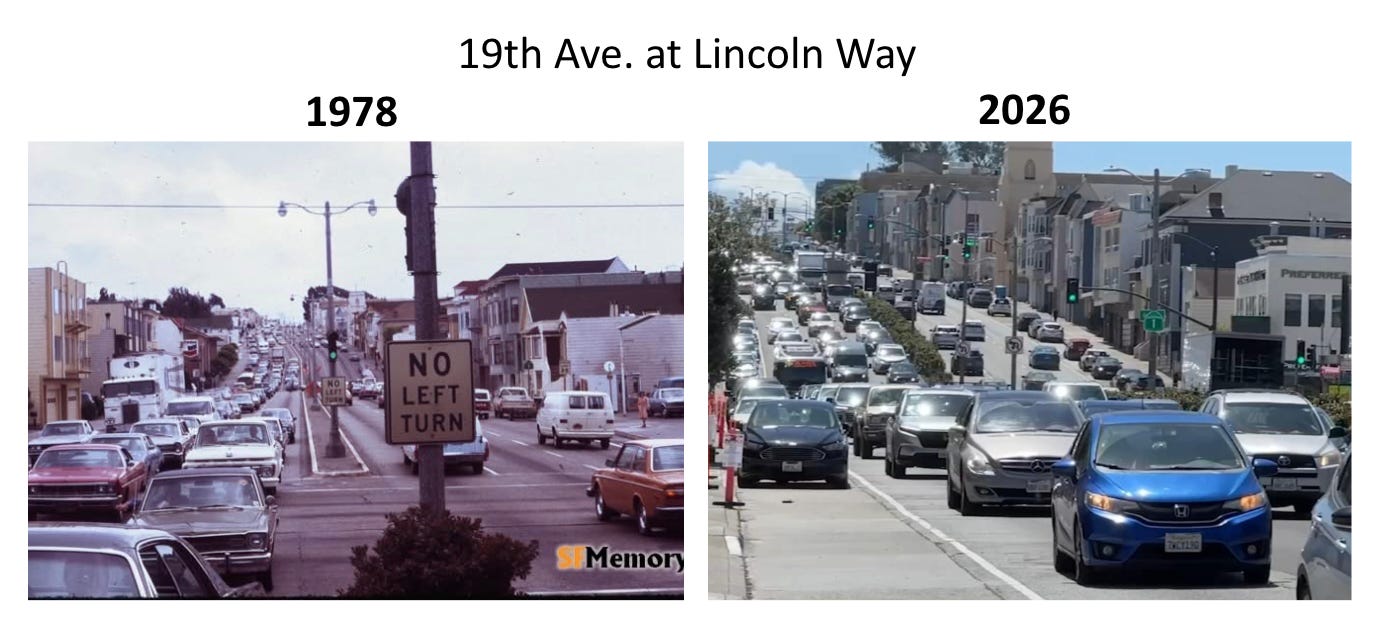
The Great Highway does not affect traffic on 19th Avenue because the Great Highway is 30 blocks away.
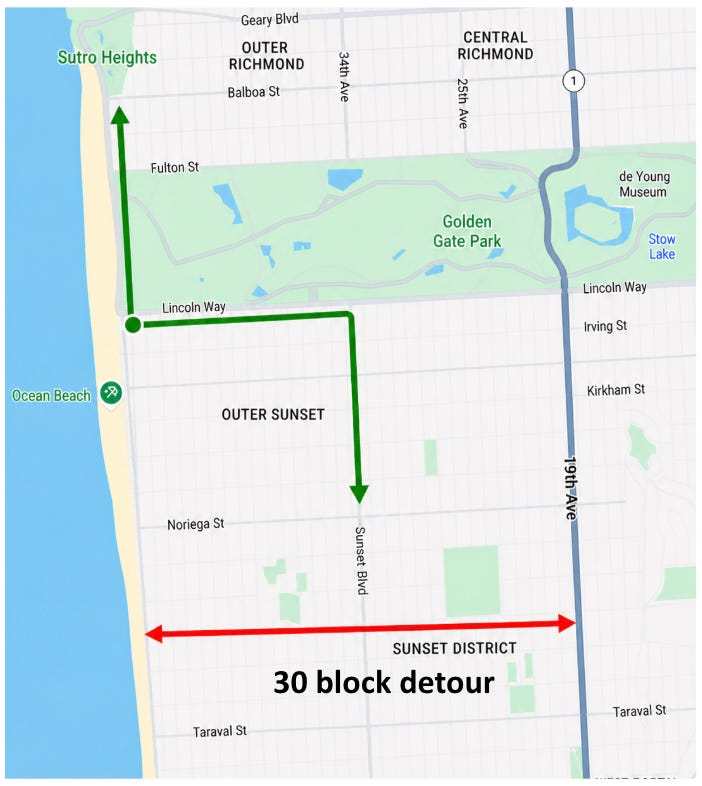
No one is going 30 blocks out of their way to use 19th Avenue. Drivers are using the six-lane Sunset Boulevard just fine.
Yet park opponents continue to fearmonger over traffic instead of focusing on facts.
Let’s take a look at what’s really happening.
This drone video shows rush hour traffic in the Sunset. It is set against the audio from local news reports:
We are living in an era of disinformation in America and unfortunately we are not immune in San Francisco.
There have been three traffic studies since Sunset Dunes opened — by the city government and independent media including the San Francisco Chronicle and the Frisc. All three studies say the same thing: Minimal traffic impact.
Sunset Dunes has proven its worth by producing beneficial outcomes for the environment, the local economy, and the health of everyone who uses it.
Our kids and grandkids will be grateful for this space — because San Francisco will only realize its full potential if we do bold and positive things like create Sunset Dunes.
A Deeper Look…
What would Jimmy Carter do?
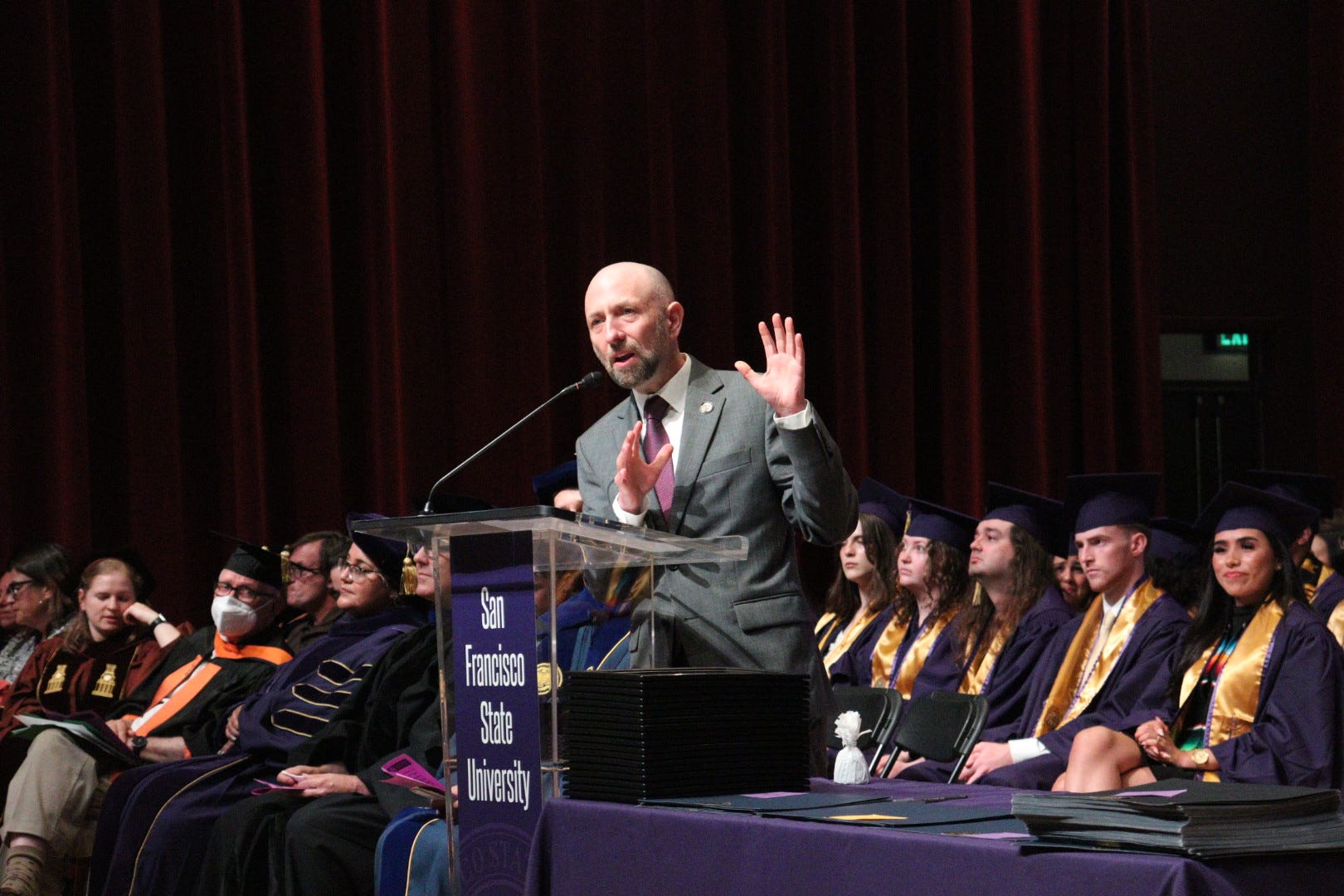
When I gave the commencement speech for political science graduates at San Francisco State University in 2024, I told the class:
“You are charged with analyzing and navigating some of the world’s most intractable issues. But if you want to practice your skills for the State Department or the United Nations, go to any neighborhood association meeting in San Francisco and ask the following questions: Should the Great Highway be a highway for cars or a park for people? Where should we build housing? How tall can the buildings be?”
I remember that line drew some knowing laughter from the audience.
Then I said: “Dare to answer those questions and you risk being kicked out of office as a one-term supervisor.”
Another laugh line, because comedy is found in the painful truth.
I told the graduates about the plaque above my desk that says “What Would Jimmy Carter Do?”
A one-term president. But history has shown the wisdom of his views on human rights, the economy, and the environment.
He put solar panels on the roof of the White House nearly 50 years ago. And when Jimmy Carter lost his 1980 re-election campaign, the new president — Ronald Reagan — tore out those solar panels. America doubled down on the gas and oil industry.
Imagine how much better the world would be if we had followed Jimmy Carter’s vision and spent the past half century focused on advancing renewable energy.
Political courage
I wish more elected officials had the courage of Jimmy Carter. Imagine if Bay Area leaders in the 1960s had more courage when planning BART.
This map of the BART system shows where the trains go. But it’s also a map of where the trains don’t go.
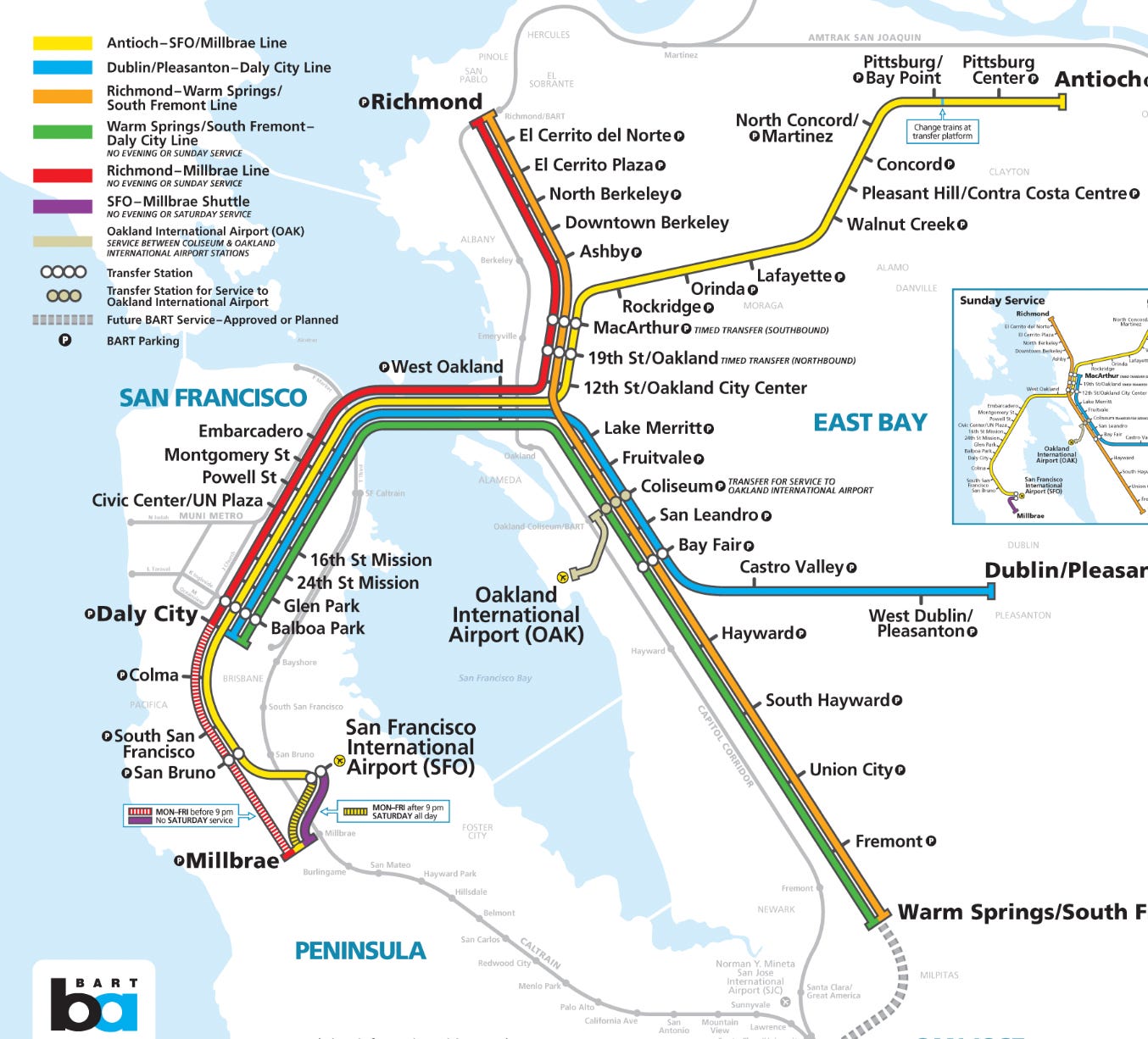
Why doesn’t BART go down Geary to the westside? Or to Marin in the north? Or beyond the airport in the south? Going to all those places makes sense. But what happened?
Look at this BART planning map from 1960:
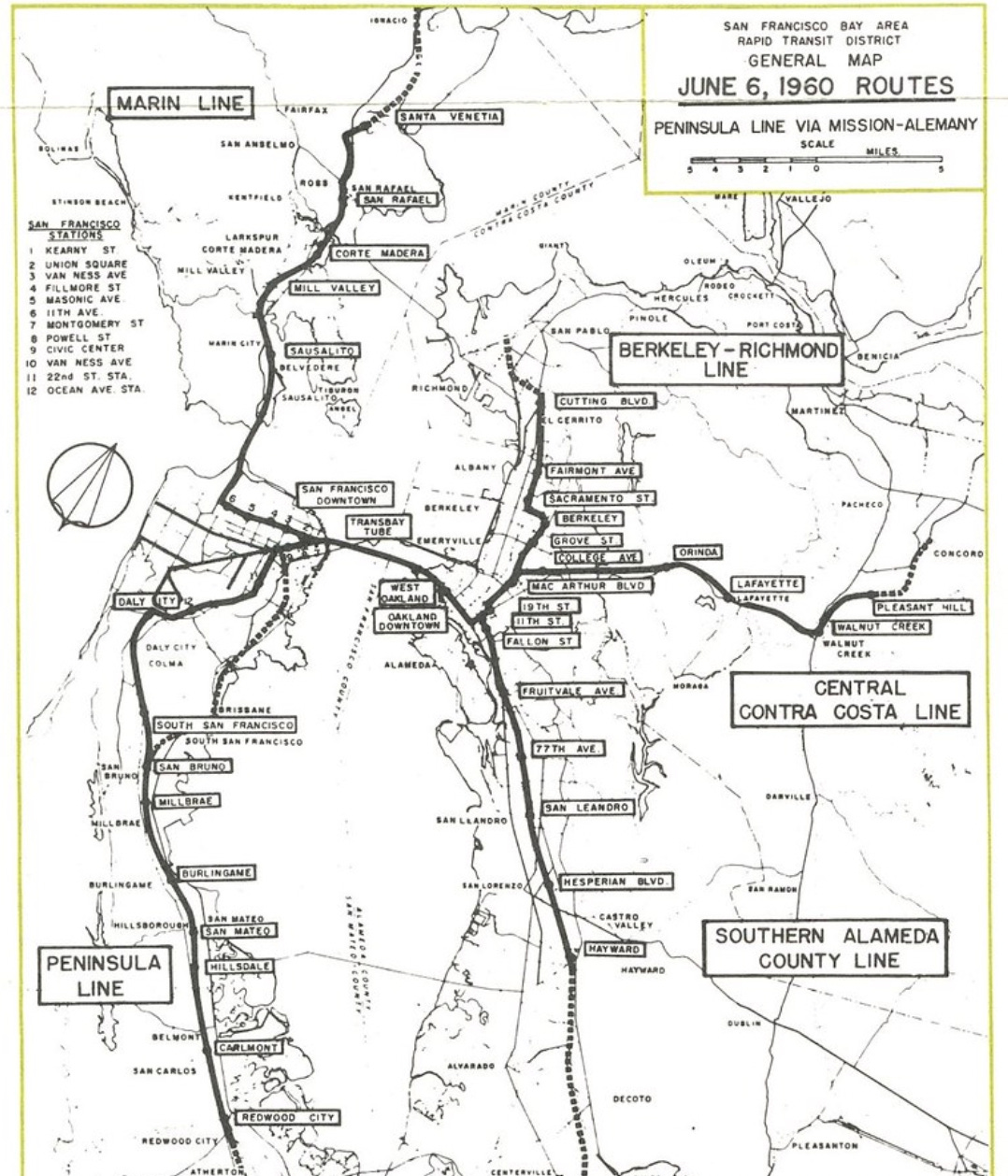
Notice BART going down Geary to the westside, to Marin, and beyond the airport all the way to Palo Alto. BART was supposed to go to all these places.
Look at this map. It’s what BART could have looked like today if we built the original plan and kept expanding it the past 50 years.
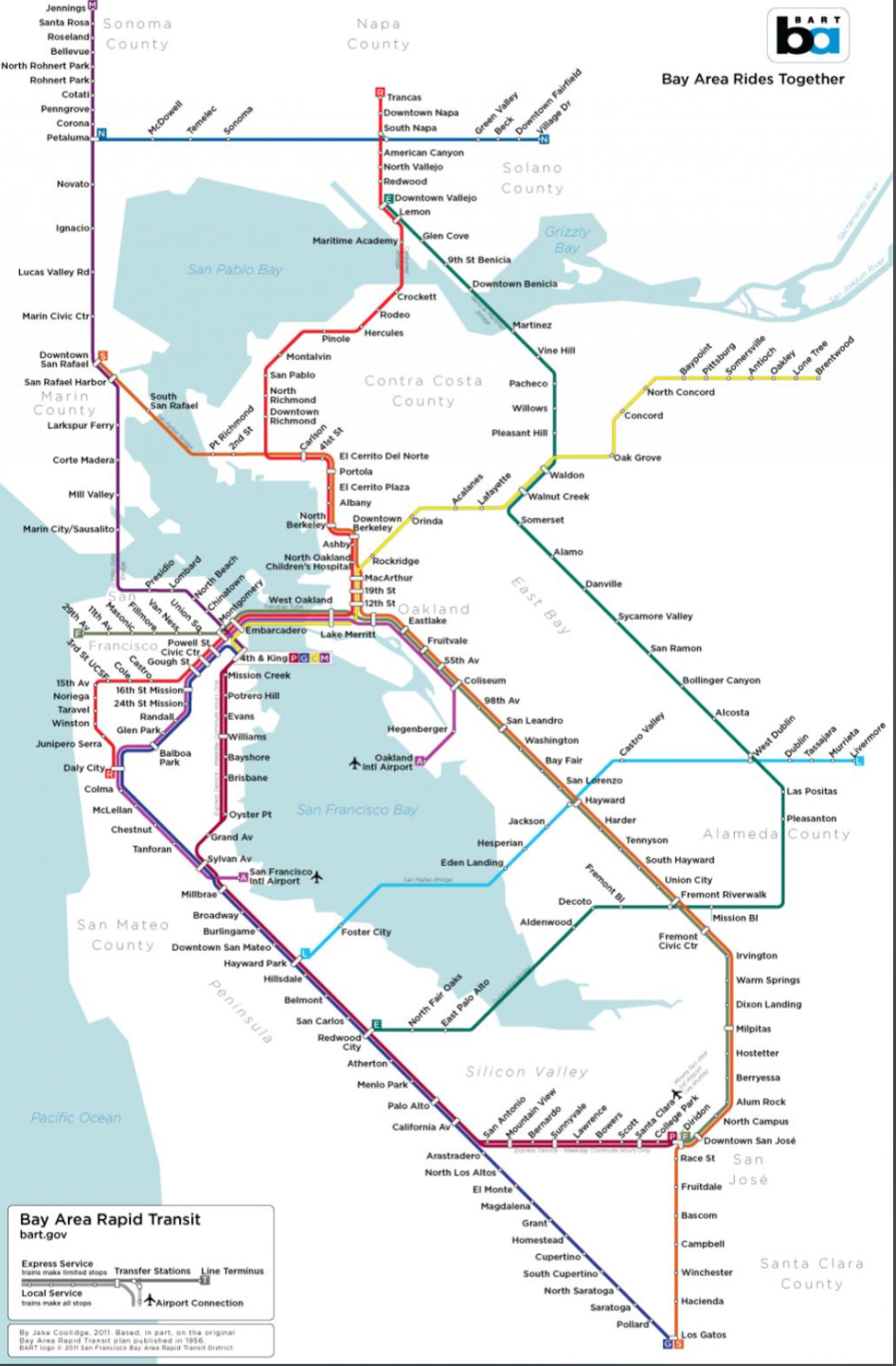
What happened? These routes were not politically popular. And political survival usually comes first for elected officials.
Imagine if politicians had more courage when BART was being planned and opened for service.
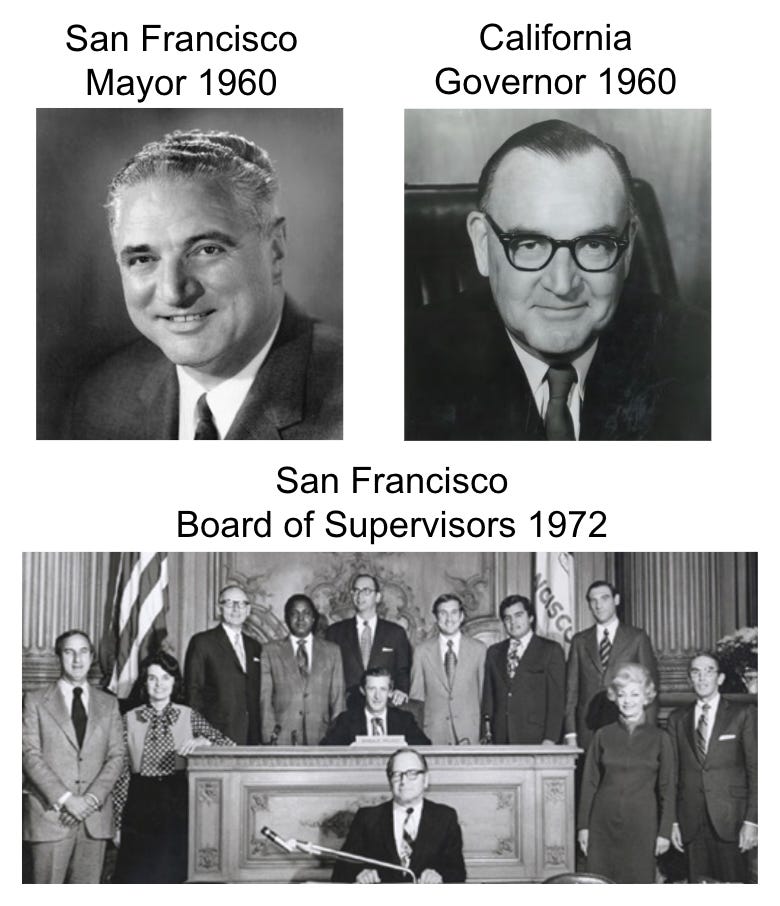
Mayors and governors are eventually forgotten. City supervisors are definitely forgotten.
Time in these offices is finite. Which begs the question: What is the best use of that time?
Is the answer political survival or investing in the future? Taking the safe position on BART in the 1960s or pushing for what BART really needed to be?
The politicians who survived the planning of BART are mostly forgotten. But what if they had created the public transportation system we so desperately need today?
Even if we don’t remember their names, we would be grateful for what they did. That’s why we must ask: What decisions are elected officials making today that people will appreciate in 50 years?
That’s why I ask myself: What would Jimmy Carter do?
I believe he would have supported Sunset Dunes because it was the courageous thing to do.
Understanding park opposition
It can be difficult to understand why the positivity of a park and all of its benefits have generated such vitriol and anger.
Opponents will not give up trying to get rid of Sunset Dunes — even after losing multiple ballot measures, appeals, and lawsuits.
It’s important to note that Sunset Dunes replaced a section of road that literally uses the words Great Highway.
This is upsetting for people who want a suburban driving and parking experience in San Francisco. It symbolizes the changes they fear are coming as the city evolves to embrace more bike lanes, public transportation, denser housing — and the new residents it will attract.
Opposition to Sunset Dunes became synonymous with opposition to new housing. And the movement for my recall went beyond the park to focus on my longtime support for more housing density.
There was a lot of ugly rhetoric and disinformation spread online. It was disappointing to see so much fearmongering over welcoming new people to the Sunset.
The catchphrase “Don’t let Ocean Beach become Miami Beach” stoked fears of rampant development that is simply not true.
Yet park advocates were labeled as “dangerous” by recall leaders for supporting something that will attract “new people” and “a different type of people with a whole different set of values and visions” to the Sunset.
This rhetoric does not represent our city’s values. San Francisco has always been a place for newcomers — most notably during the Summer of Love. Every new immigrant, artist, LGBTQ person, and innovator makes our city better.
The attack on Sunset Dunes and new housing raises some important questions about the future of San Francisco. Do we want to be a city that only looks to preserve the past? Or do we want to be a forward-looking city that welcomes new ideas?
I support progress, whether it’s open spaces where people can connect with each other or the housing we need to accommodate newcomers and let our adult kids and essential workers stay in San Francisco. If we never changed anything in San Francisco, the Sunset would still be sand dunes.
Supporting democracy
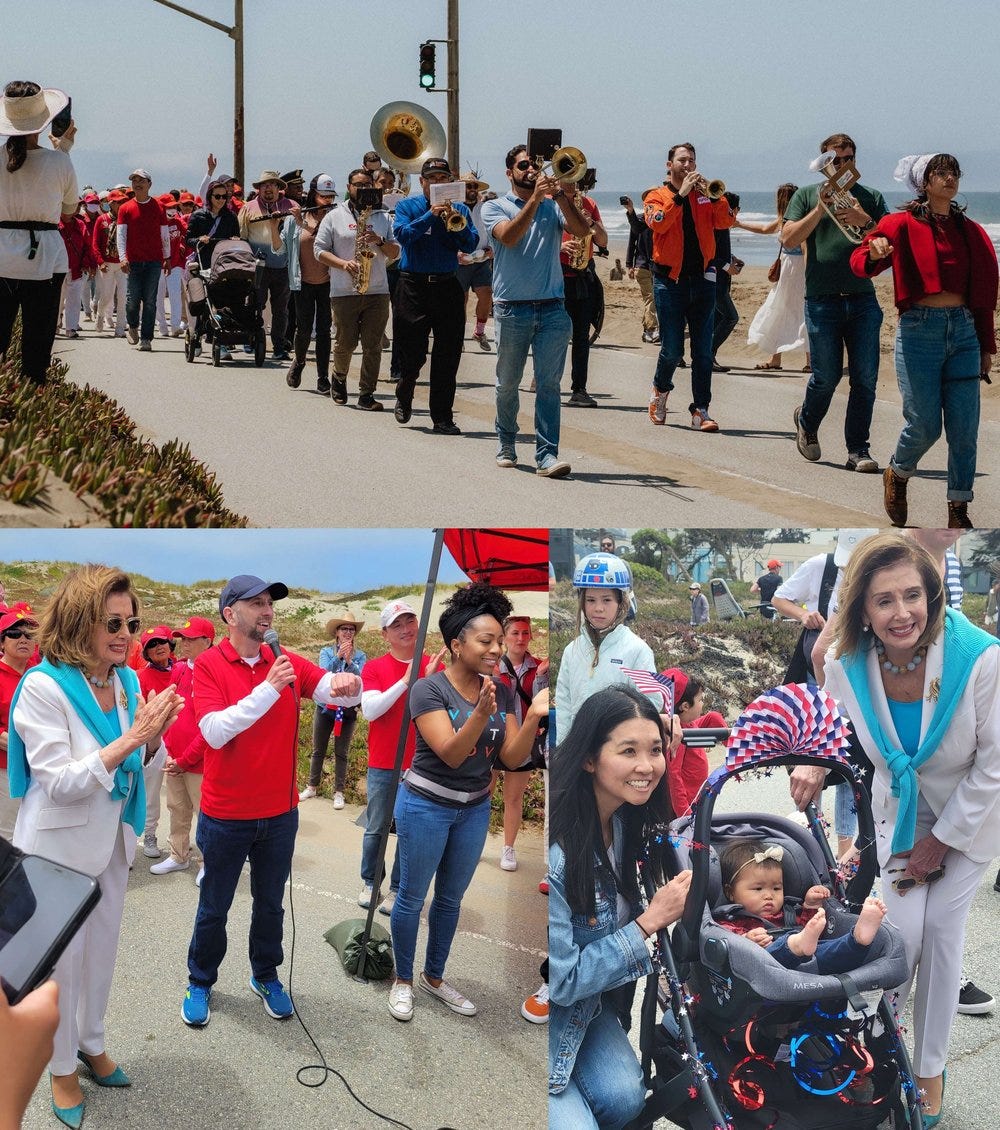
When Speaker Emerita Nancy Pelosi attended the first-ever Fourth of July parade in 2024 at what would become Sunset Dunes, the debate over the Great Highway was already functioning as a stress test for local democracy.
Prop K had just been introduced by myself and four other supervisors, asking voters if they wanted to convert the middle section of the Great Highway into a permanent park.
A majority of seven supervisors signed the ballot argument in support of Prop K. But it would be a couple weeks before the content on the November 2024 ballot was finalized.
That’s when park opponents demanded I remove my signature and lobby the other supervisors to remove theirs to keep Prop K off the ballot.
They resorted to intimidation and bullying tactics. They waved a recall petition in my face and threatened to submit it if I didn’t comply by their deadline. They even threatened to organize a boycott of the popular Sunset Night Market.
We refused to remove our signatures. And I will always remember what Pelosi told the crowd gathered at the Great Highway to celebrate our nation’s birth. In a democracy, she said, “everybody has a say. Everybody might not have his or her way at the end of the day, but at least they know their voices will be heard.”
Park opponents had ample say, starting with the first ballot measure on the Great Highway — which they sponsored. They set the precedent for the entire city voting on the future of the Great Highway. Their ballot measure in 2022 (Prop I) asked voters to keep cars on the road seven days a week. It failed by a significant margin. Undeterred, they filed multiple appeals to the Board of Appeals and the California Coastal Commission to bring cars back full time. Every effort failed.
As a candidate for supervisor in 2022, I opposed Prop I. At debates I said it would kill a weekend-only park and prevent the creation of a full-time park. My campaign website talked about the opportunity to turn the middle section of the Great Highway into a permanent park. I’ve always said the future of the coast should be a park.
After being elected supervisor, I met with advocates on both sides. The issue had been in the public forum and debated for years. Everyone’s position was well known — and entrenched. A resolution was needed and I supported democracy by giving people more choice at the ballot box about what to do with their coast.
I did extensive public education about Prop K in 2024 and what it would and wouldn’t do. I even made an explanatory video with on-the-scene reporting from the Great Highway. Prop K sought more voter clarity by asking a simple question: do you want a permanent park or not?
The only other way to resolve the Great Highway debate was to have supervisors legislate a park. Instead of speaking at the ballot box, residents could have given public comment for and against as the legislation moved through City Hall.
It’s important to note, however, that a majority of supervisors supported Prop K. That means a legislative process would have likely had the same outcome.
It’s also important to note that Prop K allowed for more public debate in the most open, democratic, and transparent process possible. Every voter had an equal say because the coast belongs to everyone.
Yet park opponents won’t accept what voters have been saying. After losing their own Prop I, park opponents tried to block Prop K from being voted on.
When they lost again at the polls, they spent a year recalling me. But my recall had no bearing on Prop K. So they sued to invalidate the measure and the will of the people. A judge dismissed the case. Now they are appealing the ruling and put another measure on the ballot for the November 2026 election. This will be the third time San Franciscans have voted on the issue. When will it end?
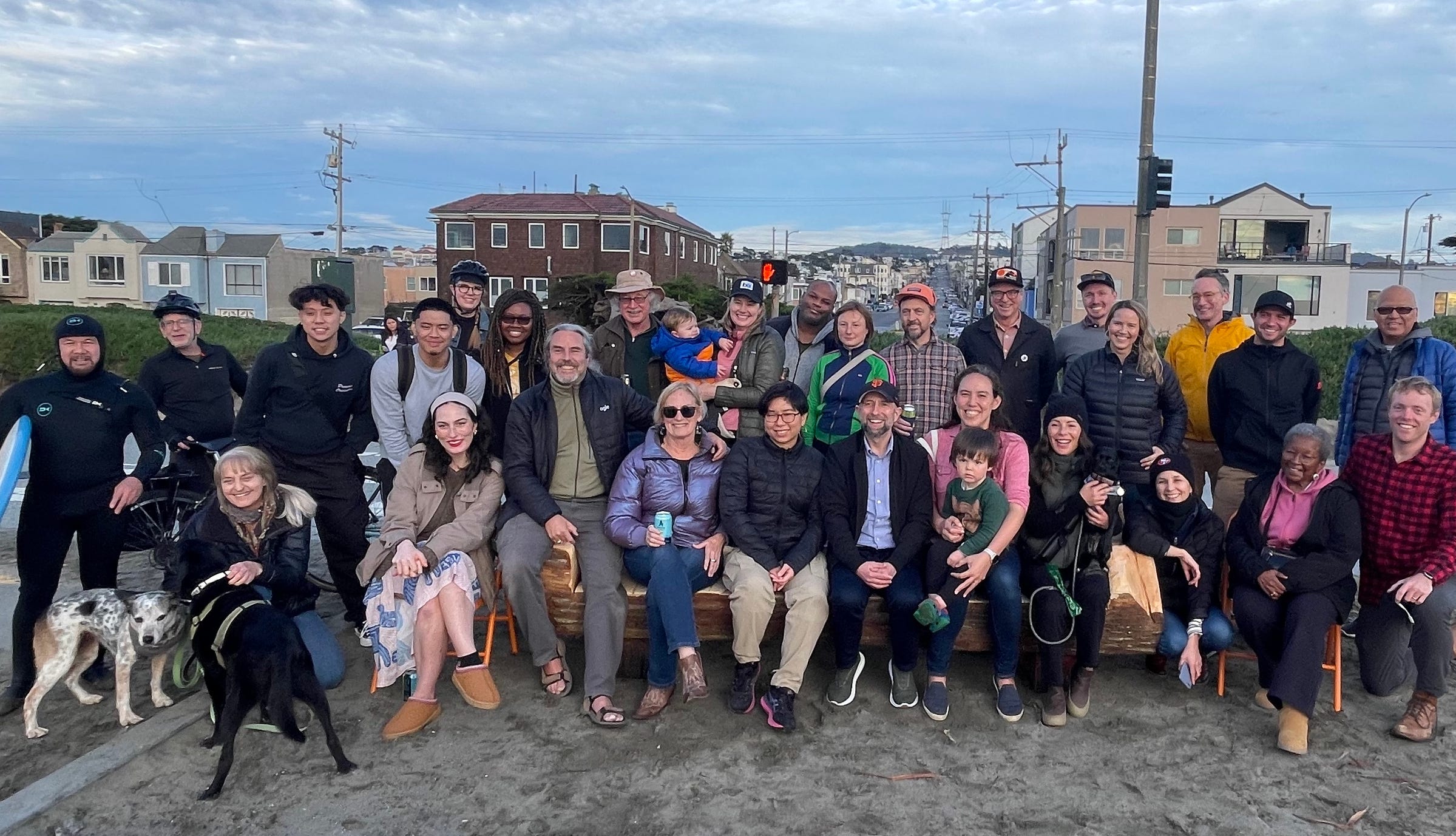
Understanding park supporters
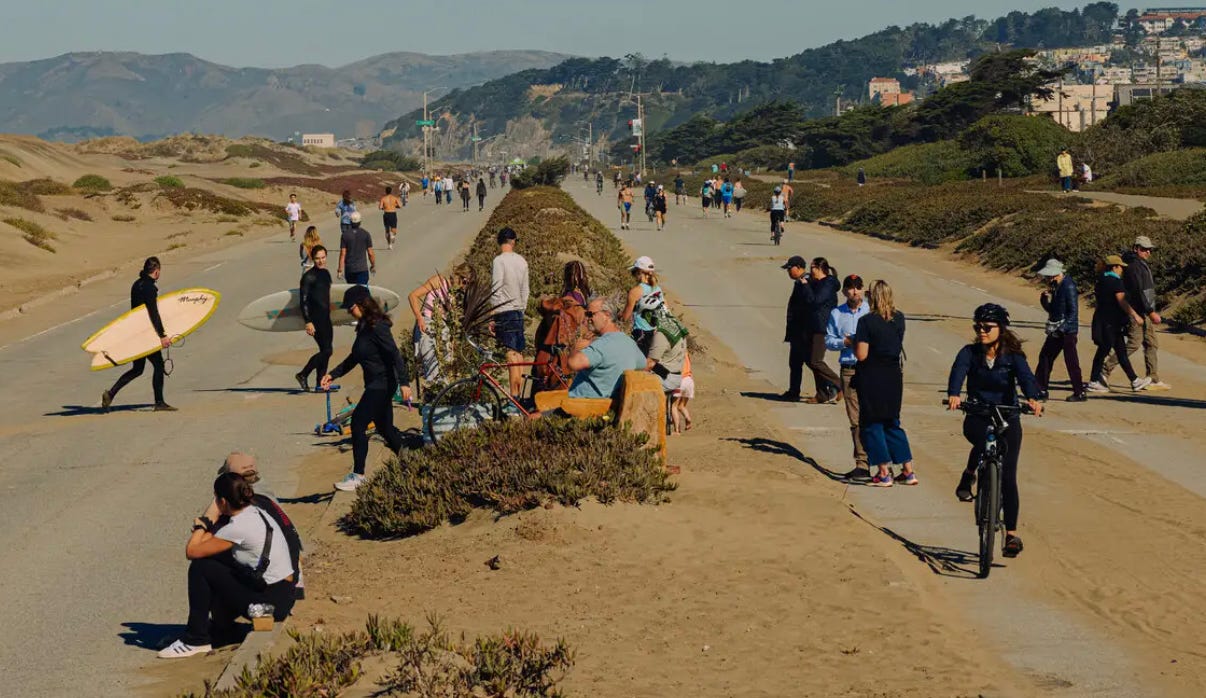
The people in this picture are proud San Francisco is home to the largest pedestrianization project in California history. They represent the majority of San Franciscans who voted to create a permanent park.
Much has been said about the majority in the Sunset who did not vote for the park. I empathize with their views.
There was a lot of uncertainty and fear around changing something that had been known for a century. When you cannot see what the new park will look like and you are left to imagine the traffic impact, all of those unknowns activate the boogeyman.
Then disinformation is spread through social media. And mainstream media amplifies the voices of fear.
Given all that, it is a marvel that nearly 40 percent in the Sunset supported the park from the very start. They took a leap of faith without any guarantees. That’s a lot of early adopters.
The people in the above picture are park supporters for many reasons: it’s good for the environment, it’s a boost to local businesses, and it brings them physical and mental well-being. Some are parents, some ride a cargo bike, and many drive a car when they need to.
This is a group that believes in climate change and wants to do what they can to address the existential threat.
They want to change the 20th century mindset of centering every public policy decision on what’s good for the automobile. They see the benefit in centering what’s good for the environment and people.
This includes building denser housing in conjunction with public transit — because suburban sprawl is terrible for the environment. The refusal to build enough affordable housing in San Francisco has forced more people to the suburbs. We’re forcing essential workers to live far away and commute back into the city. Even our adult kids and grandkids have to move away.
But they can stay in San Francisco if we embrace more apartment buildings in every neighborhood. There is precedent. We built six-story apartment buildings on Irving Street a century ago when the Sunset was transformed from sand dunes into neighborhoods. We can start building them again.
If we want to keep our families and workers here, then we have to be good stewards of the environment. We will have to accept some taller apartment buildings, more public transportation, and safe spaces for pedestrians and cyclists.
Accomplishing this will take some sacrifice.
Understanding sacrifice
Sunset Dunes at the coast is not a real sacrifice.
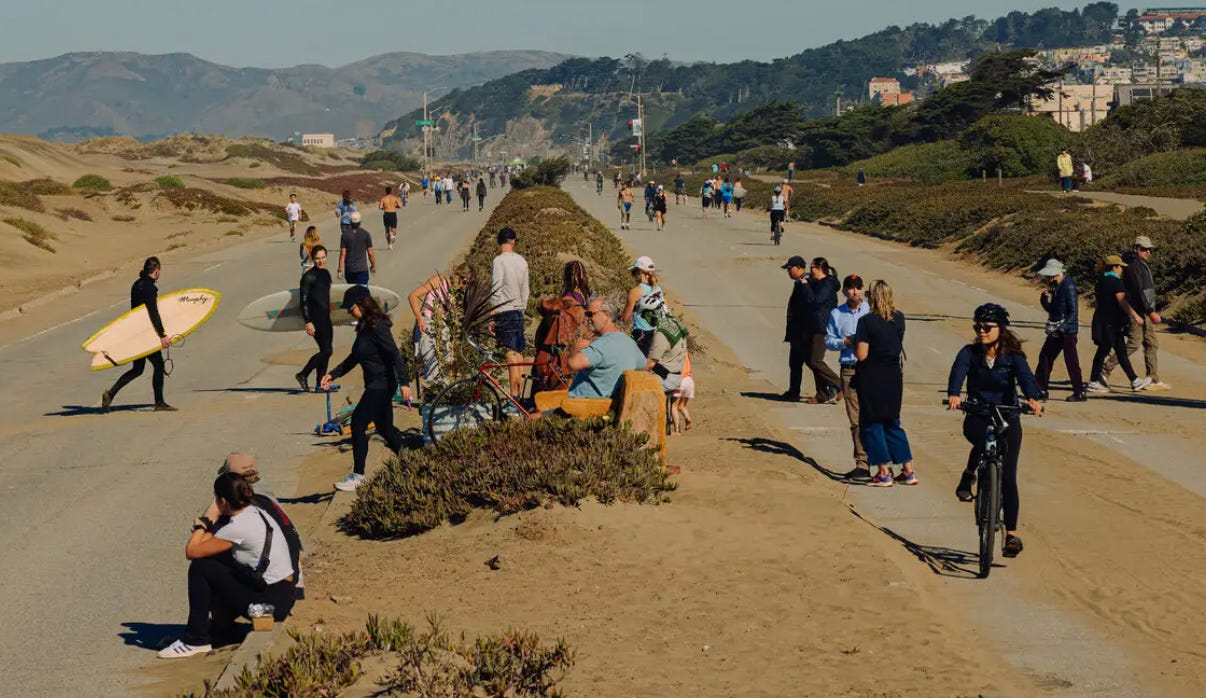
Seven-story apartment buildings on Irving Street is not a real sacrifice. It’s not asking a lot.
No one is banning single-family homes. No one is banning cars. Far from it. We’re only talking about some cars taking a slightly different route.
My grandmother lived through the Great Depression and World War II. Her generation sacrificed a lot for the greater good. Rations at home were the norm.
What are we willing to sacrifice today to help our kids and grandkids? This is an important question.
How are we ever going to come together and address our biggest issues — like climate change — if we cannot build an apartment building or change our driving habits without it becoming an ugly battle over who deserves to live in a neighborhood and define its character?
If our society melts down over having to drive a few blocks out of our way to get to the same destination, how are we going to handle the real hard stuff in the years to come?
By showing the sky did not fall when we created Sunset Dunes, just maybe it will get a little easier to be good stewards of the environment.
Lessons
The fight over Sunset Dunes offers some lessons.
Depending on how you look at it, the park can be a cautionary tale on political survival. Or it can be an example of doing something for the greater good.
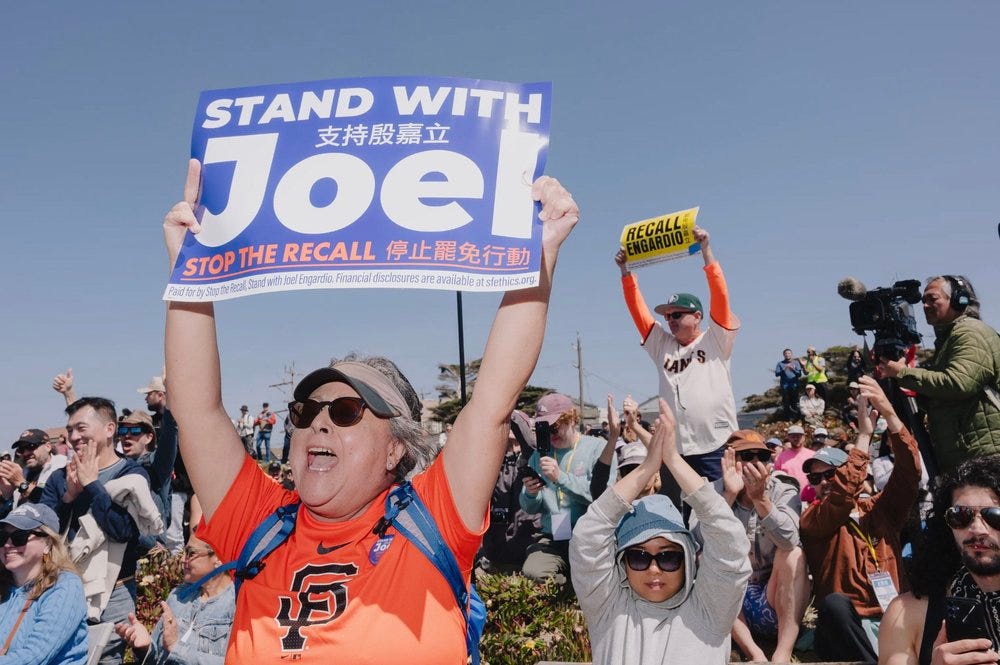
I want to thank the 8,000 people in the Sunset District who took the time to vote against my recall.
Voter turnout for the recall was 42 percent. My district has 50,000 voters. Of those, 13,000 voted for the recall.
The Golden Gate Bridge faced a lot of resistance when it was proposed. Detractors called it an “upside down rat trap.” Thankfully, forward-looking people had the courage to build it anyway and create a celebrated icon of our city.
This is the story of Sunset Dunes. I’ve never met someone who voted for the park and say they regret it. But I’ve met many people who voted against the park and say they changed their mind. Because after the park became real, they saw it was nice and traffic wasn’t a problem.
When Nancy Pelosi stood on the Great Highway at the Fourth of July parade in 2024, Sunset Dunes was not yet a reality but she could see its potential. Pelosi looked out at the families, the kids in decorated wagons, the Chinese senior dance group, the LGBTQ marching band, the folk singers, the picnic spreads — all with the backdrop of a magnificent coast.
“This is a dream,” she said. “It’s a dream and let’s hope that it can come true.”
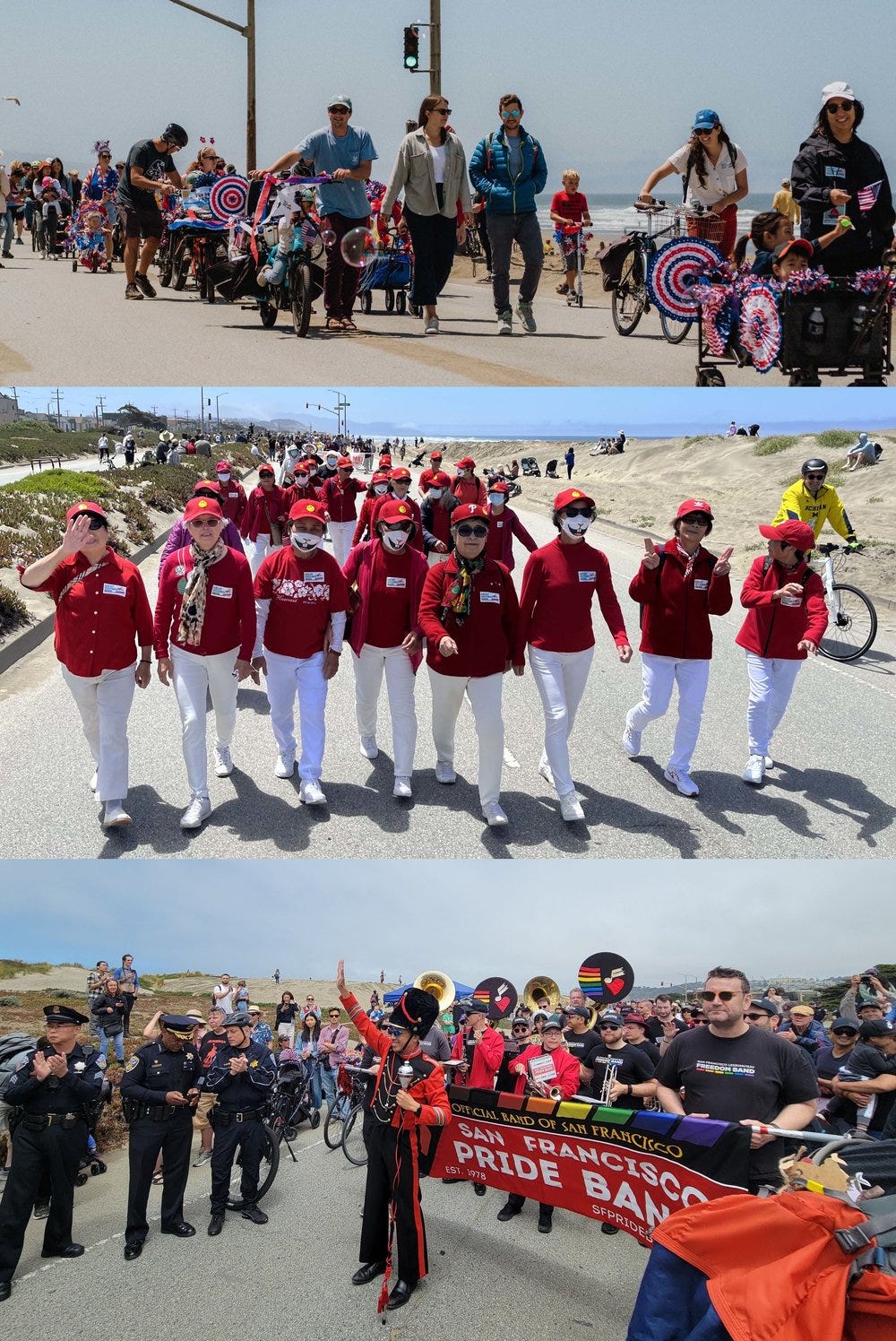
Sunset Dunes has become one of San Francisco’s most popular parks because it is a transformational space that connects people to something bigger than themselves. The power of the ocean. The beauty of the sunset. Where a child can learn to ride a bike and dream. Where a senior can roll in a wheelchair and remember. A space for every facet of life. To celebrate, mourn, heal, and reflect.
I invite you to visit Sunset Dunes and find new ways to connect with nature. Discover the diverse food and shops of the Sunset neighborhoods. Be inspired by your coast, your community, and your new coastal park.
Be like Dorothy
Dorothy Lathan has lived across from the Great Highway for more than six decades. She was one of the first Black residents allowed to buy a home in the Sunset — a few years after baseball star Willie Mays was denied on the westside.
Dorothy fought for and was the benefit of change. She contributed to our city as an educator and community leader. And she loves Sunset Dunes.
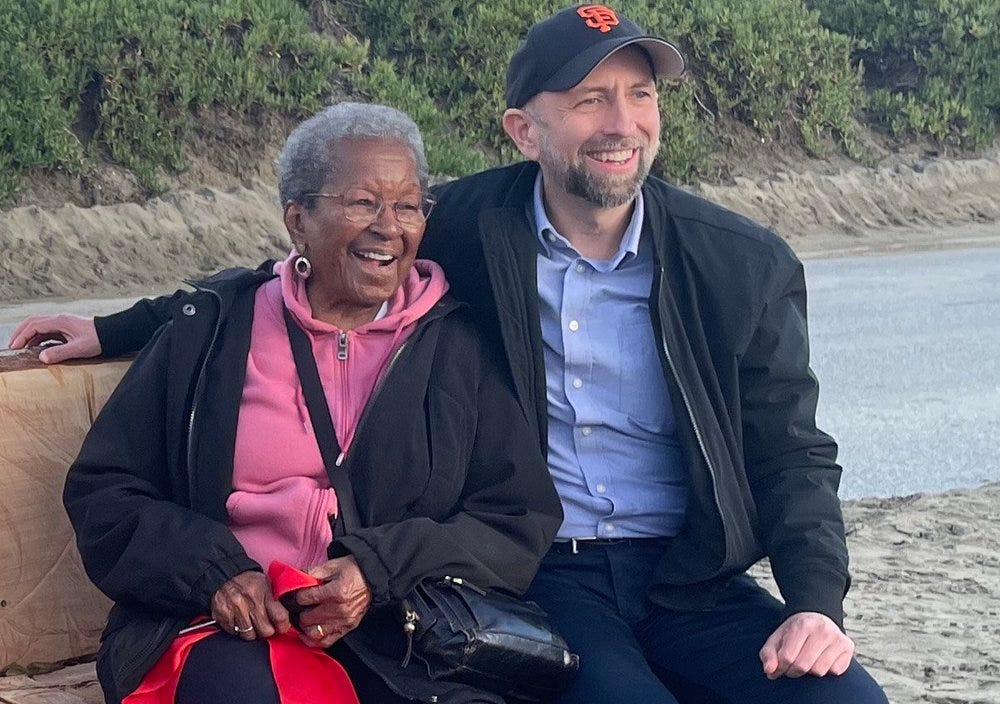
My favorite image of Dorothy is seeing her at a Sunset night market, a cane in one hand and a margarita in the other, bopping to the music. At 93, she is the antithesis of the angry old man who yells at clouds.
Let’s be like Dorothy. She is more fun to be around.
We don’t have to fear change. We can truly be the most progressive city in the world — always welcoming new people and ideas to create our best San Francisco.
I’m certain Jimmy Carter would have said amen to that.
My Supervisor Record…
Farewell speech at San Francisco Board of Supervisors.
Not every resident is going to agree with their elected supervisor on every issue 100 percent of the time. Many residents supported me on issues like public safety, education, and small business — even if they disagreed with me on Sunset Dunes.
The question “What Would Jimmy Carter Do?” was on my mind for a number of issues that divided the Board of Supervisors and the public. In those moments, this is what I did:
Helped write the Gaza ceasefire resolution and was the key vote to make it veto-proof. We passed the ceasefire resolution 8-3, which could override threats of a mayoral veto.
Defended our Sanctuary City policy to ensure it was not amended or watered down.
Called for the release of the Banko Brown shooting video when the district attorney tried to keep the public from seeing the footage of a security guard killing an unarmed person.
Stood with labor when the vote wasn’t unanimous.
I faced a lot of pressure to vote differently, but I voted my conscience. I’m proud of that.
And I’m proud of what my office has done for the Sunset district in my nearly three years as supervisor. I made sure we prioritized the tangible things a supervisor could do to improve the daily lives of residents:
Created an online fix-it form to upload a photo of a problem that needs fixing. Our fixed-it file addressed thousands of constituent issues from pot hole patching to playground repairs.
Launched the Sunset Night Market with community partners. It attracted tens of thousands of people to the Sunset to support local businesses. We also proved what’s possible for night markets on commercial corridors citywide. Now they’re everywhere and that’s wonderful.
Legislated opportunities for homeowners to build and sell backyard in-law units — giving longtime residents options to downsize and create family wealth.
Legislated taller apartment buildings on corner lots so families can stay in San Francisco. It allows for a ground floor amenity like a grocery or cafe that the entire neighborhood can benefit from.
Protected the coast from high rise development and stopped the avenues along the Sunset Boulevard greenbelt from being up-zoned.
Worked with parent advocates and sponsored Prop G, which provided the public pressure the school district needed to bring back 8th grade algebra after a decade of delay.
Secured a million dollars in relief funding for merchants who were struggling during the L-Taraval train construction.
Helped restore funding for civil legal services and food security for seniors in the city budget.
Met with every officer at Taraval police station and visited the firehouses to hear directly what our first responders need. I also created a civilian public safety liaison to assist crime victims. They run crime prevention programs in English, Cantonese, and Mandarin.
Brought more foot patrols to merchant corridors with a program that lets recently retired officers return to the beat — and supported the mayor’s plan to expand and improve the program to help solve the SFPD staff shortage.
Restored parking access along Lower Great Highway, which had been overtaken with RVs.
Started a new Fourth of July parade tradition.
Launched the Sunset Community Band.
Replaced stop signs with new signal lights for better traffic flow and safer pedestrian crossings.
Led the creation of Sunset Dunes — the largest pedestrianization project in California history.
Delivered city and state investments to make the greenway along Sunset Boulevard green again after it had fallen into disrepair over the years. Now the two miles of parkland along Sunset Boulevard can connect Lake Merced and Golden Gate Park to create an emerald necklace of San Francisco that extends to the coast. This includes Sunset Dunes.
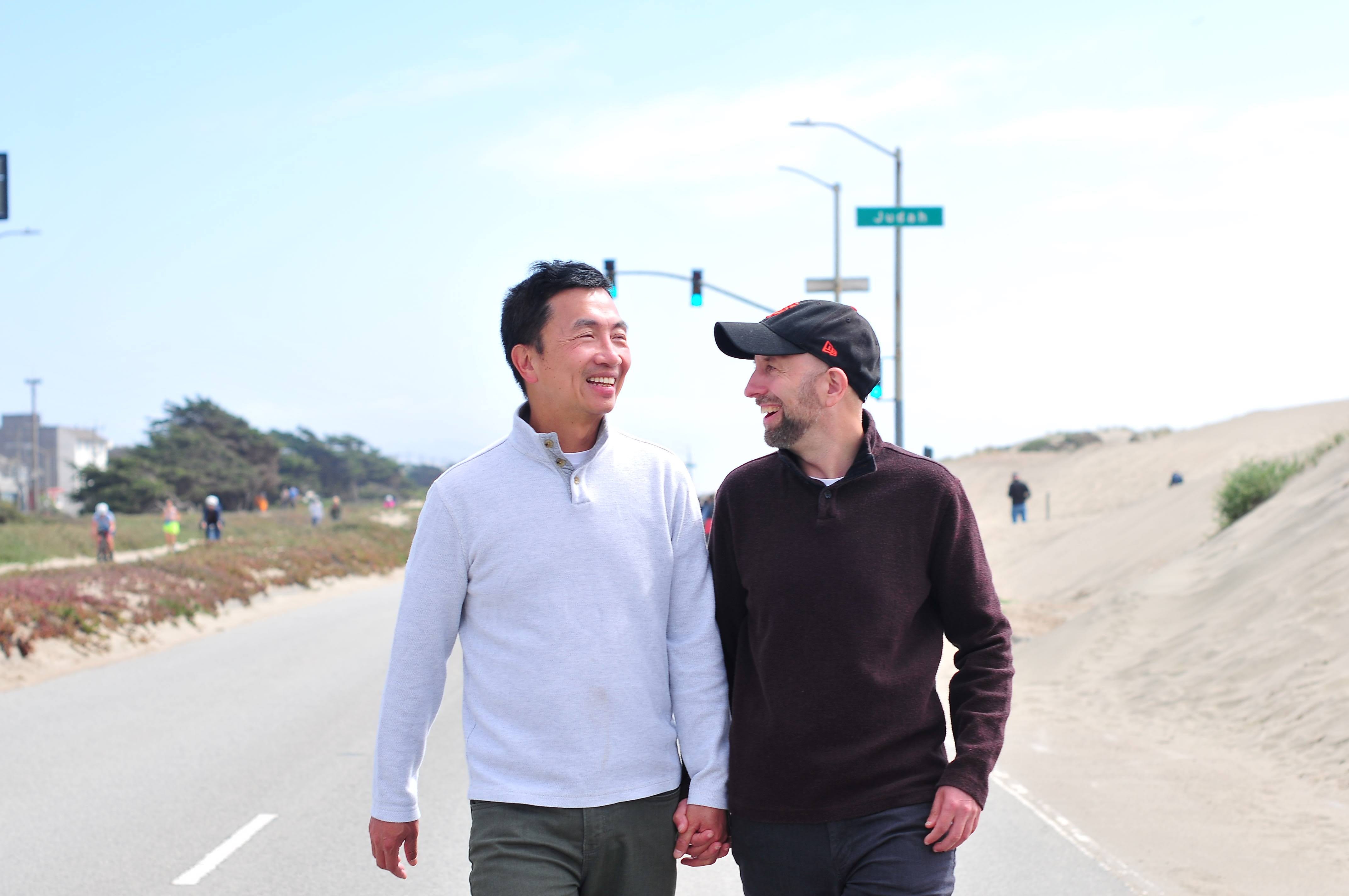
Politicians come and go, but the creation of Sunset Dunes will benefit countless lives for generations to come. Long after I’m retired, I look forward to walking and sitting in Sunset Dunes with my husband enjoying the ocean air and view. I hope you join us.